Red Light Therapy for Varicose and Spider Veins: Does It Actually Work
Varicose and spider veins are common, and men dealing with them often look for a low-cost, non-invasive option before considering a medical procedure. Red light therapy comes up constantly in that search, partly because it gets marketed for almost everything. Our guide on how often to do red light therapy covers the treatment in general if you are new to it.
This is a direct look at what red light therapy can and cannot do for visible veins, and what actually addresses the problem underneath them.
Does Red Light Therapy Help Varicose Veins?
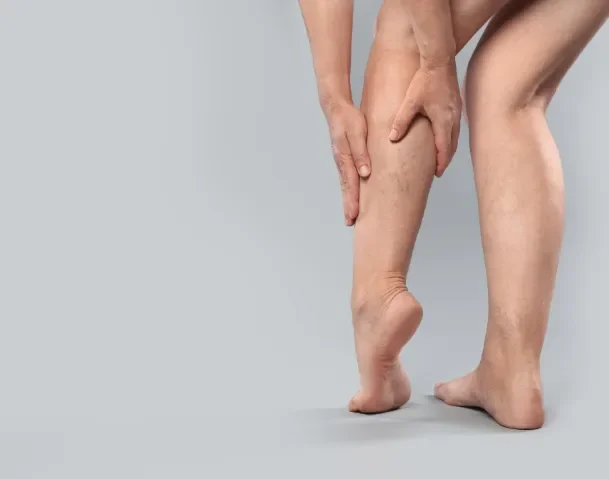
The short answer is that it does not fix them. Varicose veins form when the one-way valves inside a vein fail. Blood pools instead of moving back toward the heart, pressure builds, and the vein stretches and bulges. That is a mechanical failure in the vein wall and valve structure.
Red light therapy does not repair valves and does not reverse that stretching. Nothing in the research suggests otherwise, and any product marketed on that claim is going well past the evidence.
What red light does have documented effects on is circulation and inflammation at the skin and superficial tissue level. So the realistic ceiling is some relief in surface discomfort and skin appearance around an affected area, not a change to the vein itself.
Why the Valve Problem Matters More Than the Appearance
This distinction is worth sitting with, because it determines whether you are solving anything.
If the vein is bulging, the valve has already failed. Reducing redness on the skin above it does not slow the progression underneath. Untreated varicose veins can worsen over time and, in some cases, lead to skin changes, swelling, or ulceration. That is a reason to get them assessed properly rather than managed cosmetically.
Asking whether red light therapy helps with varicose veins symptoms is the more useful framing than asking whether it treats them. It may help modestly with the former. It does not do the latter.
Spider Veins Are a Slightly Different Case
Whether red light therapy helps spider veins differently comes down to anatomy. Spider veins are smaller, sit closer to the surface, and do not usually involve the same degree of valve failure. That makes a surface-level effect somewhat more plausible, particularly around minor redness and the look of very fine vessels.
Even there, it is not in the same category as sclerotherapy or vascular laser treatment, both of which close the vessel off. Those remain the standard approach for actually clearing spider veins.
What Actually Treats Varicose and Spider Veins
Being useful here means naming the real options, none of which we provide at Atlas Men's Health.
Sclerotherapy. An injected solution that collapses the vessel. Standard for spider veins and smaller varicose veins.
Endovenous laser or radiofrequency ablation. Heat applied inside the vein to seal it. Standard for larger varicose veins.
Compression therapy. Does not remove veins, but manages pressure and symptoms, and is often the first step.
Surgical removal. Reserved for cases the above do not address.
If our veins are painful, worsening, or affecting how you use your legs, a vascular specialist is the right first call, not a light panel. A referral is worth asking for rather than working through non-invasive options first and losing a year.
Where Red Light Therapy Does Earn Its Place
None of the above means red light therapy is useless. It means veins are the wrong reason to start.
The evidence is stronger for recovery, inflammation, and skin. It has a real role in skin recovery after microneedling, in muscle recovery between hard training sessions, and in general skin quality over time. At Atlas Men's Health, red light is built into the full-spectrum infrared sauna at our Midtown Manhattan clinic, used for exactly those purposes.
Can red light therapy help varicose veins as part of a broader plan? If you are already using it for recovery, there is no harm in the affected area getting exposure too. That is different from it being the reason you booked.

The Risk Factors Worth Addressing First
Varicose veins have drivers you can influence, and they are worth more attention than any surface treatment.
Bodyweight is one of the clearest. Excess weight raises venous pressure in the legs and both accelerates vein problems and makes existing ones more symptomatic. Prolonged standing or sitting, low activity levels, and poor lower-body circulation all compound it. Movement, elevation, and compression address the mechanics directly.
If bodyweight is part of your picture, that is something we do treat. Our medically supervised weight loss programs address it as a metabolic problem rather than a willpower one, and reducing venous load in the legs is one of the less-discussed benefits of getting that under control.
Frequently Asked Questions
Does red light therapy help varicose veins?
It does not repair the valve dysfunction that causes them. It may offer mild, temporary relief for surface inflammation and discomfort around an affected area, but it is not a structural treatment and will not stop progression.
Does red light therapy help with varicose veins symptoms like discomfort?
Some men report modest improvement in surface discomfort, likely tied to local circulation and reduced surface inflammation. That is symptom management, not a fix for the underlying valve failure.
Does red light therapy help spider veins better than varicose veins?
Slightly more plausibly, given their smaller size and superficial position. Sclerotherapy and vascular laser treatment remain the standard for actually clearing them.
Is red light therapy good for varicose veins as a standalone treatment?
No. As a standalone treatment for resolving varicose veins it is not sufficient. As a low-risk addition alongside compression, movement, and proper medical assessment, it plays a minor supporting role at most.
When should I see a specialist instead?
If the veins are painful, growing, causing swelling, or changing the skin around them, book a vascular assessment rather than trying non-invasive options first. Those are signs the problem is progressing.
Atlas Men's Health is not a vein clinic, and we would rather tell you that than sell you a session that will not help. What we do treat is the metabolic and hormonal side: medically supervised weight loss, TRT, and recovery protocols, at both our East Meadow clinic on Long Island and our Midtown Manhattan clinic. If weight, energy, or recovery are part of what is going on, schedule a consultation and we will tell you honestly what fits and what does not.