


Red Light Therapy for Testosterone: What It Can Do
Red light therapy keeps coming up in conversations about natural testosterone support, and men already running a testosterone replacement therapy protocol or looking for additive support want a straight answer on two things. Whether the effect is real, and how to use red light therapy for testosterone in a way that matches what the research actually tested.
The short version is that the effect appears real and modest, the protocol matters far more than most people assume, and the version of red light therapy most men have access to is not the version the studies used.
Does Red Light Therapy Boost Testosterone?
The question of whether this is a measurable mechanism or marketing built on adjacent research comes down to what the studies tested. Red light therapy testosterone research is still early, and most of it involves small sample sizes rather than large controlled trials.
What that research consistently involves is direct exposure of the testicular region to red and near-infrared wavelengths, with the proposed mechanism being photobiomodulation: light absorbed by mitochondria in testicular tissue, stimulating cellular energy production in the cells responsible for testosterone synthesis.
The reported effects are modest. Nothing in this literature approaches the magnitude of change a man with clinically low levels sees from testosterone replacement therapy. Anyone presenting red light as an alternative to treatment for low testosterone is going well past what the evidence supports.
That does not make it worthless. It makes it a marginal input, which is a reasonable thing to add once the larger inputs are handled.
Targeted Exposure Versus Full-Body Panels
This is the part that gets lost most often, and it changes the answer entirely.
The studies suggesting a testosterone effect used light applied directly to the lower abdomen and testicular area. That is a targeted protocol with a specific exposure site. A full-body panel used for skin or recovery is a different intervention, and there is limited evidence that general full-body exposure produces the same effect on testosterone production.
Practically, this means the red light therapy most men encounter, whether a home panel, a sauna with built-in red light, or a recovery chamber, is delivering recovery and skin benefits rather than a testosterone protocol. Those benefits are real and worth having. They are just not the same claim.
If a device or clinic markets full-body red light as a testosterone treatment, that is the gap between the marketing and the research.
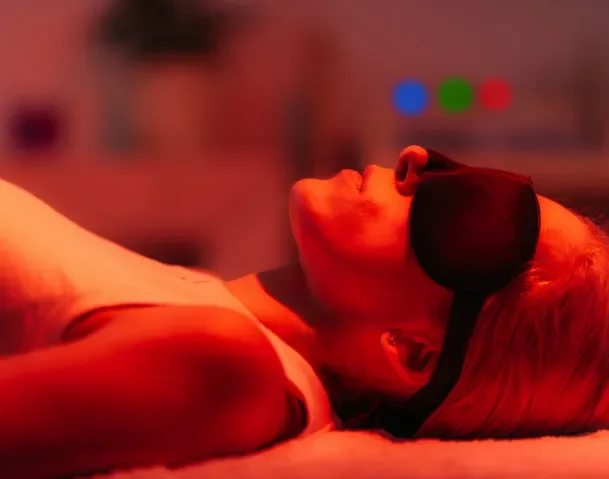
How to Use Red Light Therapy for Testosterone
Understanding how to use red light therapy for testosterone starts with accepting that the protocol is specific. Based on the available studies, it involves red or near-infrared wavelengths in the 630 to 850 nanometer range, applied directly to the lower abdomen and testicular region, in short sessions of roughly 10 minutes, several times per week.
Two things about that protocol deserve stating plainly.
It comes from small research studies rather than clinical practice guidelines. And it is not a treatment we provide at Atlas Men's Health. If you are considering it, raise it with a clinician who knows your bloodwork before you start, rather than working from a device manual.
For general session cadence across other applications, including skin and recovery, our guide on how often to do red light therapy covers the frequency question in more depth.
Fertility, and Why It Belongs in This Conversation
Any protocol involving repeated light and heat exposure to the testicular region intersects with fertility, and that deserves more attention than it usually gets in articles on this topic.
Testicular tissue is temperature sensitive. That relationship is well established, and it is the reason saunas, hot tubs, and laptop heat come up in fertility discussions. Red light therapy at therapeutic intensities is non-thermal by design, so it is not the same exposure as heat. The point is that the research base on light exposure specifically is thinner than the research base on heat, and if you are trying to conceive or planning to, that is a conversation to have with a clinician rather than a variable to experiment with.
Men who want a baseline picture of fertility before adding anything have options for testing it properly, and that is worth doing first.
Know Your Baseline Before You Add Anything
Adding a marginal input to an unmeasured baseline is how men end up unable to tell whether anything worked.
Total testosterone alone does not tell you much. Free testosterone, the portion actually available to your tissues, is what tracks with symptoms, and it depends on SHBG and albumin as much as on total levels. Our free testosterone calculator converts those three lab values into your free and bioavailable testosterone, which gives you a number worth tracking against.
If you have never run a full hormone panel, that is the first step, well ahead of any light protocol.
Where Red Light Fits in a Hormone Protocol
Red light therapy earns its place in a men's health routine on recovery, sleep quality, and skin, with testosterone support as a possible marginal addition rather than the headline.
At Atlas Men's Health, red light is built into our full-spectrum infrared sauna at the Midtown Manhattan clinic, where it does what full-body exposure does well: supports recovery between hard training blocks and helps with skin quality over time.
For testosterone itself, the larger inputs are sleep, body composition, training, and where relevant, a clinician-managed protocol built on labs. Mood and motivation sit in this picture too, and the dopamine and testosterone connection covers a mechanism most men overlook when they are chasing a single number.
Frequently Asked Questions
Does red light therapy boost testosterone?
Small studies using targeted red and near-infrared light exposure to the testicular region report modest increases in testosterone. The effect appears real but limited, and it is not a substitute for treating clinically low testosterone.
How to use red light therapy for testosterone correctly?
The protocols in the available research use red or near-infrared wavelengths in the 630 to 850 nanometer range, applied directly to the lower abdomen and testicular area, in sessions of around 10 minutes several times weekly. General full-body panels are not the same targeted approach.
Will a full-body red light panel raise my testosterone?
There is limited evidence that general full-body exposure produces the testosterone effect seen in targeted studies. Full-body panels and saunas with built-in red light are better understood as recovery and skin tools.
Is red light therapy safe if I am trying to conceive?
Therapeutic red light is non-thermal, so it is not the same exposure as heat, but the research on light exposure to the testicular region is limited. If fertility is a current concern, discuss it with a clinician before starting any targeted protocol.
Can red light therapy replace TRT for low testosterone?
No. The effect sizes reported in red light therapy testosterone research are far smaller than what testosterone replacement therapy produces in a man with clinically low levels. It is an additive tool at best.
Atlas Men's Health builds testosterone optimization plans around real bloodwork and clinical evaluation rather than around single tools. TRT, peptide therapy, and full hormone panels are available at both our East Meadow clinic on Long Island and our Midtown Manhattan clinic, with telemedicine across New York State. Schedule a consultation to find out what your levels actually need.