


Sermorelin and Sleep: How This Peptide Therapy Can Enhance Your Rest
Sleep is not optional - it's the foundation everything else is built on. Mental sharpness, physical performance, hormone balance, immune function, and even your body's ability to burn fat all depend on getting enough high-quality rest. Yet poor sleep is one of the most common complaints among men over 35, and it tends to get worse with age.
What many people don't realize is that the connection between sermorelin and sleep goes deeper than most therapies address. Declining sleep quality and declining growth hormone levels are closely linked - and the relationship runs in both directions. Growth hormone (GH) is released primarily during deep sleep, and GH itself helps promote the deep sleep stages where your body does its most critical repair work. As GH production drops with age, sleep quality often follows.
This is where sermorelin for sleep optimization enters the picture. By stimulating your body's natural GH production, Sermorelin may help restore the hormonal conditions needed for deeper, more restorative sleep - without the risks or dependency associated with traditional sleep medications.
The Science: Growth Hormone and Sleep Architecture
To understand how sermorelin sleep therapy works, you need to understand the relationship between growth hormone and sleep architecture.
Sleep occurs in repeating cycles of non-rapid eye movement (NREM) and rapid eye movement (REM) stages. The deepest phase - slow-wave sleep (SWS), also called stages 3 and 4 of NREM sleep - is where the most restorative processes happen: tissue repair, muscle recovery, immune regulation, and memory consolidation. It's also when your body releases the largest pulses of growth hormone.
A landmark review by Van Cauter et al., published in the Journal of Clinical Endocrinology & Metabolism, established that approximately 70% of daily GH secretion in men occurs during sleep, with the most significant pulse happening within minutes of the first episode of slow-wave sleep. The amount of GH secreted during these pulses directly correlates with the duration and intensity of slow-wave activity.
Critically, this relationship is bidirectional. GHRH (growth hormone-releasing hormone) - the same molecule Sermorelin mimics - is not just a GH stimulant. It is itself a sleep-promoting substance. Research published in Sleep Medicine Reviews by Obal and Krueger (2004) demonstrated that GHRH directly activates sleep-regulatory neurons in the preoptic hypothalamus, increasing NREM sleep duration and slow-wave activity independent of its effects on GH release.
In practical terms: GHRH helps you fall into deep sleep, and deep sleep triggers more GH release. When GHRH activity declines with age, both sides of this equation suffer. This is exactly why Sermorelin and sleep quality are so closely connected.
How Sermorelin Supports Better Sleep
Sermorelin is a synthetic analog of the first 29 amino acids of GHRH - the biologically active portion of the molecule. When injected subcutaneously at bedtime, it reinforces a process your body is already trying to do: release growth hormone during the early hours of sleep.
Here's why bedtime dosing matters. A study by Steiger et al. found that when GHRH was administered in a pulsatile fashion during the first half of the night, it significantly increased both GH levels and slow-wave sleep in healthy young men. However, the same compound administered in the early morning hours had no effect on sleep, because the body's cortisol-driven wakefulness signals override GHRH's sleep-promoting effects at that time. This confirms that nighttime administration is essential to capture sermorelin sleep benefits.
Another important finding comes from research by Marshall et al. (1996), which compared episodic (pulsatile) versus continuous GHRH administration. Episodic dosing - which better mimics how the hypothalamus naturally releases GHRH - produced significantly greater increases in stage 4 slow-wave sleep than continuous infusion. Since Sermorelin is typically given as a single bedtime injection that creates a burst of GHRH activity, it aligns well with this pulsatile model.
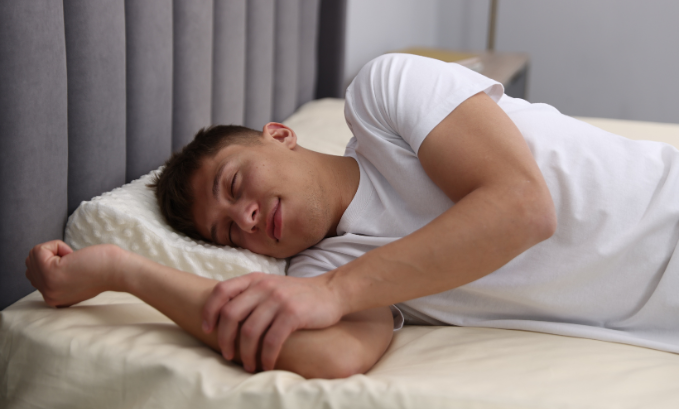
Specific Sermorelin Sleep Benefits
Deeper Slow-Wave Sleep
The most direct benefit is increased time spent in slow-wave sleep - the phase your body needs most for physical recovery, hormone regulation, and cognitive maintenance. By boosting nocturnal GH release, Sermorelin helps restore the deep sleep architecture that naturally erodes with age. Many patients report that sleep begins to feel more restorative within the first one to two weeks of therapy.
Fewer Nighttime Awakenings
Waking up multiple times during the night is a hallmark of declining sleep quality and declining GH levels. When deep sleep is more consolidated, you're less likely to be pulled into lighter sleep stages or full wakefulness. Patients using sermorelin for sleep frequently report sleeping through the night more consistently.
Improved Sleep Efficiency
Sleep efficiency refers to the percentage of time in bed that you're actually asleep. Low sleep efficiency means you're lying awake too long before falling asleep or spending too much time in light, non-restorative stages. By reinforcing the hormonal signals that initiate and sustain deep sleep, sermorelin sleep therapy may improve overall sleep efficiency - meaning you get more out of every hour in bed.
Better Circadian Rhythm Regulation
GH follows a clear circadian pattern - levels peak at night and fall during the day. When this rhythm is disrupted (by stress, shift work, aging, or poor sleep habits), the feedback loop between GH and sleep quality breaks down. Sermorelin's bedtime dosing helps reinforce the natural nocturnal GH surge, which can support a more consistent sleep-wake cycle over time.
How to Use Sermorelin for Sleep Optimization
Sermorelin is administered as a subcutaneous injection, typically in the abdominal or thigh area. For sermorelin sleep optimization, the standard protocol is a single daily injection at bedtime on an empty stomach (at least two hours after your last meal). Food intake - especially carbohydrates - can blunt GH release, so fasting before the injection helps maximize its effect.
Dosing varies based on individual needs, body weight, and clinical assessment. Your provider will determine the appropriate starting dose and may adjust it based on your response, lab values (including IGF-1 levels), and symptom improvement.
Most patients begin noticing sleep improvements within the first one to two weeks, with benefits continuing to build over the first two to three months of therapy. For best results, sermorelin for sleep should be combined with good sleep hygiene practices: a consistent bedtime, a cool and dark sleeping environment, limited screen exposure before bed, and avoiding caffeine and alcohol in the evening.
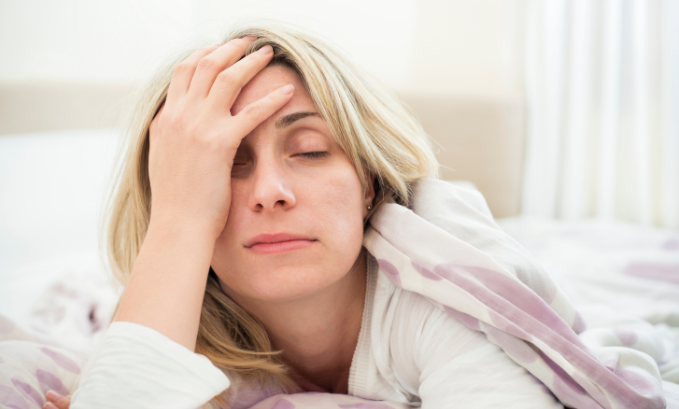
Potential Side Effects
Sermorelin has a favorable safety profile compared to both direct HGH therapy and traditional sleep medications. The most commonly reported side effects are mild and temporary:
Injection site reactions (redness, mild pain at the injection site)
Headache
Facial flushing
Occasional nausea or dizziness
Unlike benzodiazepines, Z-drugs, or other prescription sleep aids, Sermorelin does not carry a risk of dependency, next-day sedation, or cognitive impairment. It works by optimizing your body's own hormonal environment rather than artificially inducing sleep - which is why many providers view it as a more sustainable long-term approach.
If you experience difficulty breathing, swelling, or signs of an allergic reaction, seek medical attention immediately.
Does Sermorelin Help You Sleep?
Yes. Does sermorelin help you sleep more deeply and restoratively? The clinical evidence strongly says yes. Decades of research confirm that GHRH promotes slow-wave sleep, and slow-wave sleep drives the body's largest GH pulses. As both decline with age, the result is a vicious cycle of poor sleep and declining hormonal health.
Sermorelin offers a way to break that cycle. By restoring nocturnal GHRH signaling, Sermorelin supports the deep sleep stages that your body needs for recovery, immune regulation, and cognitive function. Patients consistently report falling asleep faster, staying asleep longer, and waking up feeling genuinely refreshed.
Conclusion
The link between sermorelin and sleep is one of the most well-established relationships in endocrinology. By restoring more youthful GHRH signaling at bedtime, sermorelin sleep therapy supports deeper, more efficient, and more restorative sleep - while also delivering the broader benefits of optimized growth hormone levels, including improved body composition, faster recovery, and greater vitality.
If you're struggling with sleep quality and suspect that hormonal decline may be playing a role, Atlas Men's Health offers medically supervised Sermorelin programs designed to optimize your hormone levels safely and effectively. Schedule a consultation to discuss whether sermorelin and sleep therapy is right for you.
References
Van Cauter E, Plat L, Copinschi G. Interrelations between sleep and the somatotropic axis. Sleep. 1998;21(6):553-566.
Obal F Jr, Krueger JM. GHRH and sleep. Sleep Med Rev. 2004;8(5):367-377.
Steiger A, Guldner J, Hemmeter U, Rothe B, Wiedemann K, Holsboer F. Effects of growth hormone-releasing hormone and somatostatin on sleep EEG and nocturnal hormone secretion in male controls. Neuroendocrinology. 1992;56(4):566-573.
Marshall L, Derad I, Strasburger CJ, Fehm HL, Born J. Greater efficacy of episodic than continuous growth hormone-releasing hormone (GHRH) administration in promoting slow-wave sleep (SWS). J Clin Endocrinol Metab. 1996;81(3):1009-1013.
Born J, Muth S, Fehm HL. The significance of sleep onset and slow wave sleep for nocturnal release of growth hormone (GH) and cortisol. Psychoneuroendocrinology. 1988;13(3):233-243.
Vitiello MV, Schwartz RS, Moe KE, Mazzoni G, Merriam GR. Treating age-related changes in somatotrophic hormones, sleep, and cognition. Dialogues Clin Neurosci. 2001;3(3):229-236.
Gohil A, Eugster E. Growth Hormone Deficiency and Excessive Sleepiness: A Case Report and Review of the Literature. Pediatr Endocrinol Rev. 2019;17(1):41-46.